
Tracing the Golden Age of Piracy
| View previous topic :: View next topic |
| Author |
Message |
Salty Dog
Sailing Master
Posts: 10063

192187 Gold -
         more... |
 Posted: Tue Aug 29, 2017 12:20 am Post subject: Tracing the Golden Age of Piracy |
 |
|
The period from 1700 to1730 is roughly designated as the Golden Age of Piracy, although many developments from the middle of the seventeenth century started favoring pirates. During this period, they targeted the Caribbean, the African West Coast, and the North American eastern seaboard. The Indian Ocean, too, experienced a rise of pirate attacks in the early eighteenth century. The trade routes from India to America via Africa were easy to target and helped the pirates add to their riches.
How Piracy Acquired Its Golden Age
In the middle of the seventeenth century, some pirate groups referred to themselves as privateers, and they played a significant role in the interests of their respective countries. The ongoing conflict among England, France, and Spain provided great employment opportunities to the privateers. The governments of various countries hired them to attack enemy ships and loot the treasures they carried.

Henry Morgan

William Dampier, a 17th-century pirate who always referred to himself as a privateer |
|
| Back to top |
|
 |
Salty Dog
Sailing Master
Posts: 10063
192187 Gold -
more...
|
| Posted: Tue Aug 29, 2017 12:26 am Post subject: |
|
|
As the conflict among the three countries was resolved, the privateers were rendered jobless. The end of decent maritime employment didn’t inspire these seamen to divert their ways. As a result, the privateers turned into pirates and continued their trade of raiding and looting ships. The second decade of the eighteenth century saw the outburst of pirates at their peak potential, and is therefore tagged as the “Golden Age of Piracy. “
Confluence of Three Popular Eras
Three different eras can be associated with the Golden Age of Piracy. Let’s focus on them in detail:
•The Buccaneering Period – Beginning in 1650, the European countries became more interested in enhancing their colonial powers, and hence the seaborne trade was on a rise. The French buccaneers and those of Tortuga were the two main pirate forces during the period that ended in 1680.
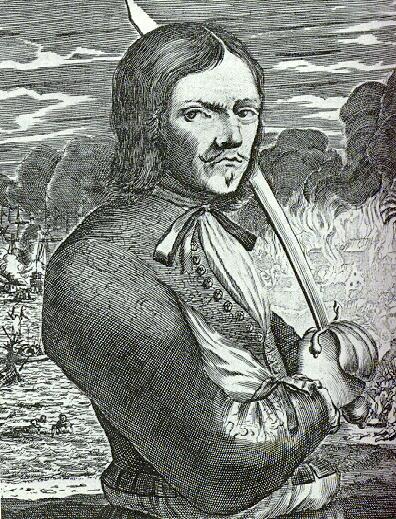
L'Olonnais

Bartolomeo-el-Porugues
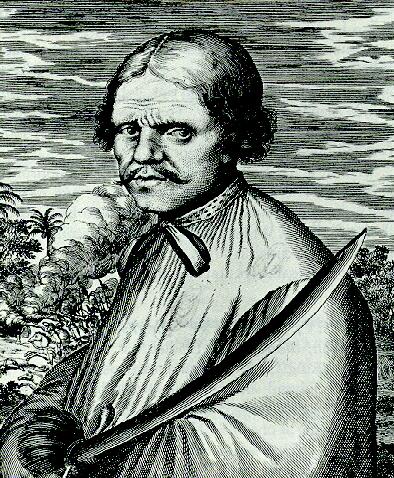
[/b]Roche Brazilliano
[b]The Pirate Round – Anglo-American pirates took center stage during this period that started in the 1690s. Spain’s Pacific coast colonies and the Indian Ocean provided tempting targets for the pirates.

Thomas Tew
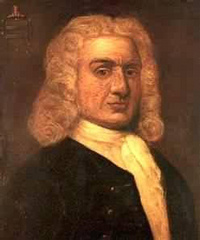
William Kidd

Henry Every |
|
| Back to top |
|
|
Salty Dog
Sailing Master
Posts: 10063
192187 Gold -
more...
|
| Posted: Tue Aug 29, 2017 12:27 am Post subject: |
|
|
Post-Spanish Succession Period - Around 1713, when the peace treaties were signed to end the War of the Spanish Succession, the trained privateers were turned out of their military duties. These sailors, and soldiers, started joining pirate captains. This period mainly contributes towards the golden growth of piracy.
Growth of Piracy
To study this growth of piracy, it is important to learn about the presence of privateers in the beginning of the Golden Age. The Bermudian merchants turned to privateers at every opportunity at the start of the eighteenth century. The ships from Spain and France were their main targets. The Bahamians on the other hand consisted of privateers who posed a threat to the British trade ships. This led to the conflict between the Bermudians and the Bahamians.
In 1701 the Bahamians captured the Bermudian sloop called Seaflower. In 1706 Spanish and French forces attempted to get rid of the Bermudians, but were themselves ousted by Lewis Middleton, a Bermudian privateer captain. Similar incidents fueled the continuous rivalry between Britain, Spain, and France.
Apart from privateers, many pirates already existed and had been growing since 1690s. For instance, Thomas Tew was the famous pirate who in 1692 raided an Indian merchant ship and looted wealth of worth $3.5 million. It was counted as one of the major pirate attacks of the period. Many other pirates were also growing in terms of power and influence.
The first major incident of pirate attack following the end of the War of the Spain Succession or Queen Anne’s War was a raid on the Spanish divers near Florida in 1715. The Jamaican governor disallowed the pirates to spend their loot from the incident on the island. This forced the pirates to find a new base at Nassau on the island of New Providence in the Bahamas. Spanish and French attacks in 1703 had destroyed the New Providence area and thus it was a good place for the pirates to establish their new base. |
|
| Back to top |
|
|
Salty Dog
Sailing Master
Posts: 10063
192187 Gold -
more...
|
| Posted: Tue Aug 29, 2017 12:39 am Post subject: |
|
|
Popular Pirates of the Age
The Golden Age of Piracy was the era for many notorious pirates of the history to emerge. Some of them included:

Edward Teach
Known as Blackbeard, Edward Teach became the symbol of terror during his short-lived career as pirate. He was taller and broader than other men of the time and had a beard all over his face. Believed to have been born in Bristol, England, Blackbeard owned the ship called the Queen Anne’s Revenge

Bartholomew Roberts
He was popularly known as “Black Bart” and raided shipping off the Americas and West Africa between 1719 and 1722. He raided and captured more ships than the other pirates of the era and became one of the most famous pirates of the golden age.

Stede Bonnett
He was a rich land owner but his passion for adventure attracted him to turn into a pirate. He was popularly referred to as “the Gentleman Pirate.” He raided ships in 1717 off the Virginia coast. He possessed a ship called Revenge, which he used for his pirate expeditions. He collaborated with Blackbeard, though that led to his crew’s disloyalty towards him.

Edward Low
This pirate was active from 1721 and 1724 and gained a bad reputation for torturing his victims before killing them. Low captued and burned over 100 ships in his career.
William Fly
No image available
He was an English pirate who raided ships around New England. In a short period of two months, Fly and his crew captured five ships. When he was being hanged, he warned captains to pay their sailors well and on time.
Black Sam Bellamy
No image available
Bellamy was an English pirate who along with his crewmen captured over 50 ships in his short career as pirate. He was known for his mercy towards those captured during his attacks. His growing popularity earned him the title of ‘Prince of Pirates’
[/img]Black Sam Bellamy
Bellamy was an English pirate who along with his crewmen captured over 50 ships in his short career as pirate. He was known for his mercy towards those captured during his attacks. His growing popularity earned him the title of ‘Prince of Pirates’
Calico Jack Rackham
Rackham was a Caribbean pirate active from 1717 to 1720. He was the one who allowed female pirates, Anne Bonny and Mary Read, on his ship.
 |
|
| Back to top |
|
|
Salty Dog
Sailing Master
Posts: 10063
192187 Gold -
more...
|
| Posted: Tue Aug 29, 2017 12:42 am Post subject: |
|
|
Pirate Appearance
The pirates of the golden age wore short and buttoned jackets, trousers and breeches of different styles, and large boots. The small cocked hats and round hats were the headgear for male pirates, while handkerchiefs and bandannas were tied around their heads by both male and female pirates. Neck clothes and sashes were used as clothing accessories.

Example of pirate attire during the Golden Age |
|
| Back to top |
|
|
Salty Dog
Sailing Master
Posts: 10063
192187 Gold -
more...
|
| Posted: Tue Aug 29, 2017 12:42 am Post subject: |
|
|
End of the Golden Age
The end of the Golden Age of Piracy was marked by the increased presence of naval forces in the areas most prone to the pirate attacks. Lack of a safe base was also one of the reasons for the decline of this era. Some of the famous pirates of the Caribbean were killed or executed, while a few of them were lost at sea. However, most of the pirates of the Golden Age era went missing or left no records. Edward Teach and Bartholomew Roberts, for example, were killed, while Stede Bonnet and William Kidd were among those captured and executed. |
|
| Back to top |
|
|
|
|
You cannot post new topics in this forum
You cannot reply to topics in this forum
You cannot edit your posts in this forum
You cannot delete your posts in this forum
You cannot vote in polls in this forum
|
Powered by phpBB © 2001, 2005 phpBB Group |
|


