
Buccaneers, Zeerovers, and West India Companies
| View previous topic :: View next topic |
| Author |
Message |
Salty Dog
Sailing Master
Posts: 10063

192187 Gold -
         more... |
 Posted: Tue Jun 02, 2020 3:33 am Post subject: Buccaneers, Zeerovers, and West India Companies |
 |
|
By Cindy Vallar
Close your eyes. Imagine yourself as a young man, perhaps fifteen or twenty years old. You walk up a gangplank onto the deck of a wooden ship. Behind you lies all that you have ever known – your family; the house where you live; the cobbled street where you play; the foods you eat; even the vagaries of the weather that greet you each day.
Around you all is abustle. Seamen weigh anchor, cast off lines, and unfurl sails. Fellow passengers crane to get a last look at loved ones. You stand in their midst, wondering what lies ahead. As the ship slowly moves away from the dock, water stretches as far as the eye can see. For weeks and months, you endure confinement within the finite space of the ship. You sleep belowdecks with everyone else, where little light shines, where the air is foul, where rats scurry. Food spoils or is infested. Green scum coats the drinking water.
Somewhere far beyond the horizon is your destination – a place where you know no one, where the flora and fauna are as strange as the people, where the food is different, and unknown dangers abound. Amid all these people, all this noise, you feel truly alone. How do you cope? How will you adapt to no longer being free to choose? For the next three years, your life is not your own. You must do another’s bidding. How will you survive?
Welcome to the world of the engagé!
In the year 1666, on the second of May, we left Havre de Grace in the St. John, under the direction of the West India Company’s delegate. The ship mounted twenty-eight guns and carried twenty seamen and two hundred and twenty passengers, including indentured servants of the Company and free persons with their servants.
We came to anchor below the Cape of Barfleur, in order to meet with seven more of the Company’s ships . . . together with a warship mounting thirty-seven guns and two hundred men.
. . . Altogether, we formed a fleet of about thirty ships, and at once we made ready for action, as we feared four English frigates (each of sixty guns) were cruising around the Isle of Ornay, in wait for us.
After our commodore . . . had given his orders, we got under sail with a good wind, in foggy weather. This favoured us, as the English might not spot us, and we hugged the French coast in order to elude the enemy. We encountered a Flemish ship from Ostend, which complained to our commodore it had been plundered that very morning by a French corsair. The warship gave chase directly, but was unable to overtake the pirates. (Exquemelin, 25)

Fascimile of a Plan of Le Havre in 1583, from 'Les Premiers Oeuvres de Jacques Devaulx Pillote en la Marine'
(Downloaded from PBS LearningMedia. Rights to use this asset expire on 12/31/2099. This work is out of copyright, with photographic rights held by the Bridgeman Art Library.) |
|
| Back to top |
|
 |
Salty Dog
Sailing Master
Posts: 10063
192187 Gold -
more...
|
| Posted: Tue Jun 02, 2020 3:35 am Post subject: |
|
|
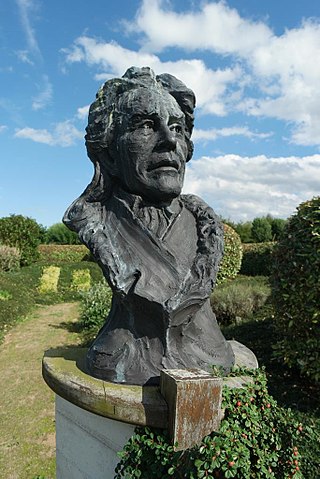
Thus begins the tale of perhaps the most famous of the engagés, not because he was an indentured servant, but because of his account of De Americaensche Zee-Roovers. Nearly 350 years ago, a Dutchman published this book. The following year, in 1679, a German edition was released and a Spanish one came out two years after that. Two English versions appeared in 1684, but these Bucaniers of America resulted in Sir Henry Morgan, one of those buccaneers, successfully suing the publishers for libel. A French edition, published in two volumes, was released two years later. The author of the original title upon which all subsequent translations were based – to a greater or lesser degree of accuracy – was a Frenchman named Alexandre Exquemelin. This book, which remains in print today, was a firsthand account of the buccaneers, for Exquemelin had sailed with the Brethren of the Coast for three or four years. But he first came to the Caribbean as an engagé of the French West India Company.
Top: First page of De Americaensche Zee-Rovers, 1678 (Source: Wikimedia Commons)
Bottom: Bust of Alexandre Olivier Exquemelin in the Garden of Personalities in Honfleur, France by evergreen68 (Source: Wikimedia Commons)

 |
|
| Back to top |
|
|
Salty Dog
Sailing Master
Posts: 10063
192187 Gold -
more...
|
| Posted: Tue Jun 02, 2020 3:36 am Post subject: |
|
|
We sailed along the coast until at last we arrived at Tortuga, on the seventh of July of the same year, without having lost a man on the whole voyage.
. . . The governors of Tortuga always acted as proprietors of the island, until 1664, when the French West India Company took possession and installed M. d’Ogeron as governor. They settled a colony there, with their delegate and indentured servants . . . . (Exquemelin, 28 & 33)
La Compagnie française des Indes occidentales (French West India Company) came into existence on 28 May 1664, and was headquartered in Havre de Grace (Le Havre).1 Its charter (monopoly) was granted for forty years, but ten years after its founding, King Louis XIV dissolved the company. He paid its debts, which amounted to 3,025,000 livres; what remained of la Compagnie’s capital (1,287,185 livres) reimbursed the king. At the time of its dissolution, all colonies managed by the Company became royal colonies.

Seventeenth-century drawing of Tortuga, artist unknown (Source: Wikimedia Commons) |
|
| Back to top |
|
|
Salty Dog
Sailing Master
Posts: 10063
192187 Gold -
more...
|
| Posted: Tue Jun 02, 2020 3:37 am Post subject: |
|
|
The intent of la Compagnie on Tortuga was to trade with Spaniards and the Dutch.
But this plan was not successful. They wanted to trade with a foreign nation, yet could not manage commerce with their own people. When the Company started up, everyone – privateers, hunters, planters and all – bought from them, for the Company supplied everything on credit. But when it came to paying, nobody was to be found. So the Company was obliged to send for its factors, ordering them to sell up everything which could be sold, and close down the enterprise.
All the indentured servants of the Company were sold, some for twenty pieces of eight and some for thirty. As a servant of the Company myself, I was among those sold, and had just the ill luck to fall into the hands of the wickedest rogue in the whole island . . . and he did me all the harm he could think of. He even made me suffer intense hunger, depriving me of my food. He wanted me to buy my freedom for 300 pieces of eight, offering to let me go for that amount. (Exquemelin, 33-34)
The selling of contracts from one person to another, such as when la Compagnie sold Exquemelin’s contract to Tortuga’s deputy governor, was not unusual. Nor was it uncommon for engagés to be ill-treated, as Exquemelin was. Setting the price of his freedom so high ensured that he remained an indentured servant.
Finally, I fell into a severe illness through all the discomfort I’d been through, and my master, fearing I should die, sold me to a surgeon for seventy pieces of eight. When I began to recover my health, I had nothing to wear except an old shirt and a pair of drawers. My new master was considerably better than the first. He gave me clothes and everything I needed, and when I had served him a year he offered to set me free for 150 pieces of eight, agreeing to wait for payment until I had earned the money. (Exquemelin, 34)
While the majority of engagés were men, some were women or even whole families. The last had to understand that if one master bought the parents, there was no guarantee that same master would buy the children, which meant families could be separated for the length of their commitments. |
|
| Back to top |
|
|
Salty Dog
Sailing Master
Posts: 10063
192187 Gold -
more...
|
| Posted: Tue Jun 02, 2020 3:39 am Post subject: |
|
|
In the beginning, indentured servants provided the primary source of labor in the West Indies. Many engagés were whites of lower incomes, ranging in age from fifteen to thirty. Unlike slavery, royal guarantees were in place to provide these servants some protections, although as in Exquemelin’s case, as well as many others, that was more theory than practice. Those stipulations, in combination with the fact that an engagé was only under contract for eighteen months to six years, made slaves a more attractive alternative for planters. Nor were they obliged to pay a slave, as they did the engagés at the end of the term of their contracts. This payment was made in tobacco, which initially provided the engagé with sufficient funds to pay for his passage back to France – few indentured servants ever planned to stay in the West Indies – but after the bottom fell out of this commodity, the payment, if made, never proved enough to cover that cost any longer.
When I was free once more, I was like Adam when he was first created. I had nothing at all, and therefore resolved to join the privateers or buccaneers, with whom I stayed . . . accompanying them on their various voyages and taking part in many important raids . . . . (Exquemlin, 34)
What set la Compagnie apart from its European counterparts was that it was very much bankrolled by the State. Jean-Baptiste Colbert, contrôleur general des Finances (Comptroller-General of Finances) and secrétaire d’État à la Marine (Secretary of State of the Merchant Navy) founded the Company and King Louis XIV was its largest shareholder. Both were also directors of la Compagnie and contributed large sums to the company’s coffers. For example, in 1665, Colbert gave 30,000 livres, whereas the Sun King supplied 1,387,000 livres. During the next four years, his contributions exceeded 4,261,545 livres. Little surprise that only he and Colbert had the authority to declare la Compagnie’s bankruptcy, and they could do so without regard as to what the shareholders desired.

King Louis XIV, circa 1661, painted by Charles Le Brun (Source: Wikimedia Commons)

Jean-Baptiste Colbert, 1655, painted by Philippe de Champaigne (Source: Wikimedia Commons)[/img] |
|
| Back to top |
|
|
Salty Dog
Sailing Master
Posts: 10063
192187 Gold -
more...
|
| Posted: Tue Jun 02, 2020 3:41 am Post subject: |
|
|
Its letters patent gave control of and sole trade rights to the “mainland of South America from the Amazon to the Orinoco, together with the island of Cayenne, all the French West Indies, Canada, Acadia, Newfoundland, and ‘other islands and the mainland of North America, from the north of Canada to Virginia and Florida,’” and the west coast of Africa between Capes Verde and Good Hope. (Mims, 69) One of the West Indian islands to which France laid claim was Tortuga.
Tortuga, of course, was better known as a buccaneering haven, than a colony of the French West India Company. Pierre le Grand was supposedly the first buccaneer to use the island as a base of operations.2 In time, the buccaneers referred to themselves as the Brethren of the Coast. Anyone who wished to join them swore to adhere to a strict set of articles known as the “Custom of the Coast.” Most were French or English, but some were Dutch. Both Henry Morgan and l’Olonnais were among the buccaneers who visited this pirate haven.

Pierre le Grand attacks a Spanish captain in his cabin. Engraving by Howard Pyle. |
|
| Back to top |
|
|
Salty Dog
Sailing Master
Posts: 10063
192187 Gold -
more...
|
| Posted: Tue Jun 02, 2020 3:41 am Post subject: |
|
|
The French settled on the island in 1625, even though Spain considered it their property. Control of the island fluctuated between France, Spain, and England throughout the century, but in 1635 it was in France’s hands and Jean Le Vasseur became its governor. He welcomed any buccaneer to Tortuga as long as he gave Le Vasseur a share of his plundered booty. In 1650, he brought several hundred prostitutes to the island to accommodate the buccaneers. Three years later, two of his own men murdered Le Vasseur. Spain forcibly seized Tortuga in 1655, and the buccaneers fled. The following year, when the English learned that the sole garrison had departed the island, men from Jamaica occupied Tortuga and invited the pirates to return. The governor of Jamaica’s attempts to rule the island failed; three years later, the French regained control and the buccaneers defended the island. In 1664, responsibility for the island fell to la Compagnie, which appointed Bertrand d’Ogeron as Tortuga’s new governor. He arrived the following year.
The colony set up by the French West India Company on Tortuga in 1664 included the planters on Hispaniola. These men strongly resented the attempt to bring them under subjection, in a land which belonged neither to the King nor the Company, and resolved not to work rather than be dominated. Deriving nothing but loss from the enterprise, the Company promptly closed it down. (Exquemelin, 62)
Between 1660 and 1715, a total of 5,200 engagés of la Compagnie left La Rochelle, France for the West Indies. Prior to departure, a representative gave a sum of money to a potential indentured servant, or his parent if a minor; in return, a suit of clothes, food and drink, and transport to the West Indies was provided after the engagé signed a contract in which he, or she, agreed to work for a specified period of time. (The master might be the Company itself, as was the case initially for Exquemelin, but it could sell an engagé’s contract as happened to him when all its assets were liquidated.) One reason many took advantage of this opportunity was because periods of famine plagued France between 1630 and 1665. (Whether this was why Exquemelin signed such a contract is unknown.)
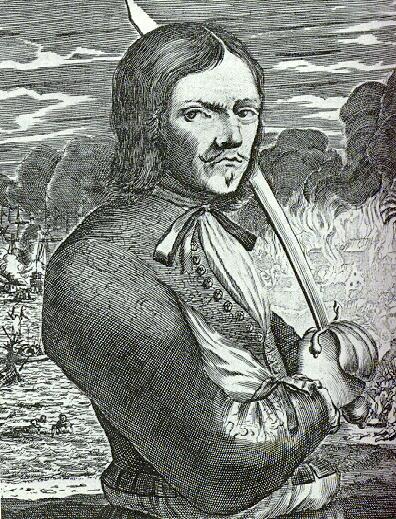
Exquemelin was not the only buccaneer to initially arrive in the West Indies as an engagé. Jean David Nau
was shipped out to the Caribbean Islands as a boy in the usual way, as an indentured servant or slave. When he had served his time, he stayed among the hunters on Hispaniola for a period. Later on he took to robbing the Spaniards, gaining immense booty and committing unspeakable atrocities. (Exquemelin, 89) |
|
| Back to top |
|
|
Salty Dog
Sailing Master
Posts: 10063
192187 Gold -
more...
|
| Posted: Tue Jun 02, 2020 3:43 am Post subject: |
|
|
Among the Brethren of the Coast, Nau was better known as François l’Olonnais. He proved quite adept at his new career, which also gained him many men eager to accompany him on his excursions in spite of his penchant toward the sadistic. In 1667, he sailed from Tortuga with at least 600 pirates aboard eight ships. They seized a Spanish prize laden with 40,000 pieces of eight, jewels, and cacao. Upon reaching Maracaibo, they targeted the sixteen-cannon fort protecting the lagoon, approaching from land rather than sea. Their ultimate destination was the city itself, but the forewarned residents had fled. The buccaneers hunted them down.
[T]he expedition returned in the evening, bringing with them about 20,000 pieces of eight, several mules laden with various goods, and some twenty prisoners – men, women and children. Next day they put some of the prisoners to the rack to find if they knew the whereabouts of other hidden stores, but nobody wanted to tell tales. (Exquemelin, 99)
L’Olonnais and his men plundered the countryside for a month, netting 260,000 pieces of eight, gems, silver, silks, and linen. When they divided their booty, each man received the equivalent of more than 100 pieces of eight.
During his marauding, l’Olonnais didn’t distinguish between rich and poor. If they were Spanish, he pillaged whatever they possessed. If his victims didn’t freely give up their possessions, he had no qualms about stretching the bonds of decency to acquire what he wanted.
[P]ossessed of a devil’s fury, [he] ripped open one of the prisoners with his cutlass, tore the living heart out of his body, gnawed at it, and then hurled it in the face of one of the others, saying, ‘Show me another way, or I will do the same to you.’ (Exquemelin, 107)
For seven years, l’Olonnais menaced the Caribbean. When his reign of terror came to an end, his demise was particularly fitting.
[I]t seems God would permit this man no further wicked deeds, but was ready to punish him for all the cruelties he had inflicted on so many innocent people . . . in the Gulf of Darien, he and his men fell into the hands of those savages the Spaniards called Indios Bravos. According to one of his companions, who only saved himself from a like fate by running away, l’Olonnais was hacked to pieces and roasted limb by limb. (Exquemelin, 117)
to be continued.......
 |
|
| Back to top |
|
|
Salty Dog
Sailing Master
Posts: 10063
192187 Gold -
more...
|
| Posted: Sun Jun 21, 2020 2:41 pm Post subject: |
|
|
As active as the French Company was, the English version never got off the ground. Proposals for such a venture first arose in 1626 during James I’s reign, with the intent that this joint-stock company would be modeled on that of the Dutch West India Company (WIC). Sir Dudley Digges propounded to the House of Commons that the company’s purpose would be to attack the treasure fleets, as well as Spanish colonies in the New World – in essence wage war on Spain – and once peace was achieved, the company would then seek to establish the right to free trade with those colonies and set up a base from which the company might conduct business within Spanish America. Naught came of that venture. Sir John Coke – a scholar, politician, and royal administrator – put forth a different proposal to George Villiers, the first Duke of Buckingham and Lord Admiral. England was on the verge of war with Spain, and Coke’s plan had two stages: first, establish bases in the Caribbean protected mainly by private vessels to harry Spanish possessions; second, the owners of these private ships would then join together to form a commercial company to exploit trade among the islands. The initial outlay of cash would be £180,000 per fleet and subscribers would voluntarily donate funds, unless those weren’t forthcoming and then there were ways in which the money might be extorted. In the end, the proposal was not acted upon.


Top to Bottom: Sir Dudley Digges by unknown artist (Source: Wikimedia Commons); Sir John Coke by unknown artist, 1623 (Source: Wikimedia Commons); George Villiers, 1st Duke of Buckingham
while serving as Lord High Admiral by unknown artist (Source: Wikimedia Commons); Sir Thomas Roe by Michiel Jansz. van Miereveldt, circa 1640 (Source: Wikimedia Commons);
and Algernon Percy, 10th Earl of Northumberland by Antohony van Dyck (Source: Wikimedia Commons) |
|
| Back to top |
|
|
Salty Dog
Sailing Master
Posts: 10063
192187 Gold -
more...
|
| Posted: Sun Jun 21, 2020 2:42 pm Post subject: |
|
|
In 1637, the Privy Council had people – among these were Sir Thomas Roe, Sir Edward Conway, and Sir Dudley Digges – look into the prospects of establishing a West India Company. The initial purpose would have been to wrest control of a Spanish American port to use as a base from which to plunder shipping. From the Earl of Northumberland’s perspective, it sounded promising, but the negatives outweighed the positives.
[I]t must constantly be pursued at great expense for some years, without expecting a present profit. Doubts whether industry and patience, as well as money, is not wanted to perfect a work of that nature. The little encouragement given to trade makes all men ready to withdraw their stock from all parts. Fear they will hardly be drawn to engage in any new adventures, and it is too great an undertaking for a few well affected men to go through with. (Calendar, “August 6,” 257)
 |
|
| Back to top |
|
|
Salty Dog
Sailing Master
Posts: 10063
192187 Gold -
more...
|
| Posted: Sun Jun 21, 2020 2:44 pm Post subject: |
|
|
The committee believed the stock offering needed would cost £200,000 annually for a period of five years. Such a venture would be overseen by a governor and council, appointed by Charles I, and based in London, although outlier offices would be established in four English ports. The governing body would be permitted to “conquer and possess any part of the West Indies, to build ships, levy men and munition for war, and make reprisals.” (Calendar, “Sept. ?”, 257) A subsequent addendum allocated the king one fifth of any proceeds realized from mining and minerals. The proposal never got beyond the talking stage.
The Parliamentarians came close to establishing a West India Company in 1629, although at the time it was called the Providence Company and came into existence through letters patent from Charles I. Its purpose was to establish a center in the West Indies from which buccaneers could operate and to found a colony in Central America. The instigation for this colony was Spain’s capture of Providence Island in 1630, and the colonists did have ties to the buccaneers of Tortuga.3
Although rovers were not received at Providence in quite so open a fashion as at Tortuga and though Gov. Bell in one or two instances refused harbourage to Dutch ships whose credentials were not quite satisfactory, yet the fact that Dutch men-of-war (or, as we should now call them, privateers) frequently touched at the island and sometimes sold the colonists captured Spanish ordnance, was sufficient to implicate the island as a harbourage for pirates. (Newton ,154)
But the loss of the Company’s guiding principal, John Pym – who needed to focus on the growing problems between king and people and whose arrest warrant would be a precipitating factor in the outbreak of civil war – as well as external and internal factors, eventually led to its demise in 1641. The germ of an idea had been planted, though, and led to another proposal to incorporate a new venture, the West India Company. Its purpose would be threefold: raid Spanish settlements, intercept the treasure flota, and drive out the Spaniards from the Caribbean and South America. It came close to fruition, but wasn’t put before the Council of State until after Lord Protector Oliver Cromwell died in September 1658. England’s economy was in such dire straits at that point that nothing more was heard of the plan after the following year. |
|
| Back to top |
|
|
Salty Dog
Sailing Master
Posts: 10063
192187 Gold -
more...
|
| Posted: Sun Jun 21, 2020 2:45 pm Post subject: |
|
|
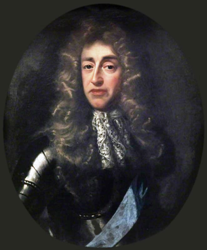
After the Restoration, the Duke of York (future James II) attempted to establish a West Indian Company (also known as the Jamaica Company). Its sole purpose was to plunder Spanish ships and colonies. According to documents in Spanish archives, this Company came into being in 1669 with funds in excess of £300,000. These and additional monies were spent on arms, men, and ships bound for Jamaica. The Duke’s intent was to be the Company’s patron since he was one of its main investors. (There is no evidence in English archives that back up this information, or that such a company ever existed.)
Denmark, on the other hand, did succeed in establishing their own West India Company on 11 March 1671, a year after Christian V became king. Its directors were known as assessors (judges), three of whom also served on the Board of Trade; the rest belonged either to the nobility or were principal shareholders. Its primary purpose was the occupation of St. Thomas and any other uninhabited American islands where plantations could be established; if people were on an island, they were to be totally ignorant of the Danes (in other words, natives). Permission was given to erect proper defenses and to administer justice according to the dictates of the Company’s charter and Danish law. Any prizes that the Company might “acquire” belonged to it, with the standard ten percent deducted for the “admiral of the realm.” (Westergaard, 33) The Company continued to exist for eighty-four years, at which time the king, Frederik V, took control and opened up the Danish colonies to free trade.
Sankt Thomas (Saint Thomas) first became connected to pirates in October 1682, when Governor Esmit received a complaint from Tortola’s governor about an illegal seizure of a sloop. A demand was made to return it and seven servants that had run away. The dispute escalated up the chain all the way to London and resulted in a rebuke from King Christian, who ordered Esmit to return vessel and people or suffer execution.
 |
|
| Back to top |
|
|
Salty Dog
Sailing Master
Posts: 10063
192187 Gold -
more...
|
| Posted: Sun Jun 21, 2020 2:47 pm Post subject: |
|
|
Sankt Thomas (Saint Thomas) first became connected to pirates in October 1682, when Governor Esmit received a complaint from Tortola’s governor about an illegal seizure of a sloop. A demand was made to return it and seven servants that had run away. The dispute escalated up the chain all the way to London and resulted in a rebuke from King Christian, who ordered Esmit to return vessel and people or suffer execution.
That same year, the governor found himself embroiled in another pirate controversy. This time it involved the French and the English. Captain Richard May of H.M.S. Ruby visited Sankt Thomas in hopes of finding Jean Hamlin, a notorious French buccaneer, and his thirty-two-gun ship, la Trompeuse. May failed to find the vessel, but another Royal Navy captain, Charles Carlisle, and his ship, H.M.S. Francis, entered the harbor early one morning in July – the same month in which May visited – and anchored within was Trompeuse. Whether it was the pirate or the fort that fired on Francis is uncertain, but Carlisle lodged a protest with the governor. Esmit claimed to have already seized Hamlin’s vessel and sent the Frenchmen ashore. A flurry of notes flew back and forth between the two, since if Hamlin hadn’t fired the gun, that meant Esmit had. Carlisle declined an invitation to dine with the governor; instead, he had his men set Trompeuse afire. (A nearby privateer also burned.) Then Carlisle warned that unless Hamlin was handed over, a message would be sent for three more navy warships to come. Esmit acknowledged that one of his men in the fort had actually fired the cannon, and promptly sent that man over to Carlisle in chains. Tortola’s governor also entered the fray, sending this message:
Have a care, I shall come from the Leeward Islands with an armed force, blow you up as quickly as the Trompeuse, and pound any pirate that you may have fitted out. (Westergaard, 54)
Instead, Governor Esmit gave Hamlin a new sloop and the Frenchman returned to pirating.
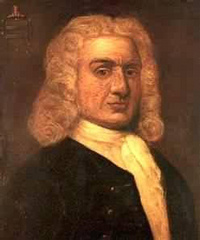
William KiddOn 6 April 1699, a 400-ton ship, mounting thirty guns and having a crew of eighty, sailed into Sankt Thomas’s harbor. At the time, the vice governor was a man named Johan Lorentz, and the vessel had garnered sufficient fame to have her captain officially labelled a pirate. She was the Quedagh Merchant and William Kidd was her master.
April 6. – Today, Maundy Thursday, there arrived before the harbor an English ship which anchored just outside of cannon range. Presently the captain sent his sloop [boat] ashore with a person on board who came to ask the vice commandant [i. e., Lorentz] whether he might come in free with his ship, which his men had compelled him to seize from the Moors in the East Indies – he could produce proof that he had been compelled to seize it. The vice-commandant answered that if he could produce proof in writing that he was an honest man, he might enter . . . [but] he [Kidd] had requested the vice-commandant to give him protection from the English royal ships, should they seek him here without orders, from which the vice-commandant saw that he was a pirate, and therefore deferred his answer till the morrow. (Westergaard, 113-114)
Vice Governor Lorentz, who also represented the Company’s interests, assembled his council to discuss the issue, but it was determined that complying with Kidd’s request would just cause problems with the English – and the Danes did not wish that.
A man came ashore . . . with a written request that Kidd receive protection on land until he could send a bark to New England, present his case there, and prove that he was no sea-robber, inasmuch as the governor there, Mylord Bellamont, was the chief owner in the ship in which he sailed out of England three years ago to cruise on the Red Sea for pirates. (Westergaard, 114)
 |
|
| Back to top |
|
|
Salty Dog
Sailing Master
Posts: 10063
192187 Gold -
more...
|
| Posted: Sun Jun 21, 2020 2:48 pm Post subject: |
|
|
This request was denied, and he was warned not to send any more men ashore unless he also brought the Quedagh Merchant into the harbor.
April 8. – Today the pirates lying outside the harbor have twice sent boats ashore at the harbor’s point. The vice-commandant at once sent his men there, and they found that seven men had been put ashore who maintained that they were passengers . . . [and proved it]. Two of these secured permission to take a canoe and fetch their baggage, but when they were on the way the ship spread sails and left, the canoe following. (Westergaard, 114)
One final instance from history in which a buccaneer and Sankt Thomas were connected pertained to Bartholomew Sharp (sometimes spelled Sharpe), who became a privateer during the Second Anglo-Dutch War (1665-1667). He was a contemporary of William Dampier, Lionel Wafer, John Coxon, and Basil Ringrose. One of the vessels that Sharp captured was El Santo Rosario (Holy Rosary), which was carrying brandy, fruit, oil, wine, and other provisions. Ringrose wrote in his journal:
They fired at us first, but we came up-board to board with them, and gave them such volleys of small shot that they were soon forced to surrender, having several of their men wounded, their Captain killed, and one only man more. In this ship . . . we found also almost 700 pigs of plate, but we took them to be some other metal, especially tin . . . . (Esquemeling, 277)
Under this mistaken impression and not wishing to deal with prisons, the pirates released Rosario and her crew with the “pigs of plate” still on board. They did so not realizing just what they had forsaken when
we turned her away loose unto the sea . . . . One only pig of plate, out of the whole number of almost 700, we took into our ship, thinking to make bullets of it; and to this effect, or what else our seamen pleased, the greatest part of it was melted or squandered away. Afterwards, when we arrived at Antigua, we gave the remaining part of it, which was yet about one-third thereof, unto a Bristol man, who knew presently what it was . . . brought it to England, and sold it there for seventy-five-pound sterling, as he confessed . . . afterwards to some of our men. Thus we parted with the richest booty we had gotten in the whole voyage, through our own ignorance and laziness. (Esquemeling, 278)
Sharp returned to England in March 1682. He and his men, who stayed at the Anchor Inn in Plymouth, possessed “several thousands of pounds and several portmanteaux of jewels and of gold and silver, coined and uncoined.” (Marley, 1:360) In May, he was arrested and charged with piracy. His trial took place on 10 June 1682, but the case was dismissed because of his knowledge of the Caribbean and for pilfering one other item from the Rosario, a pilot book containing valuable charts and information about the Spanish American coasts. Upon his acquittal, Sharp returned to the Caribbean and eventually settled on Saint Thomas, where he became the bane of the vice governor. Illness robbed Sharp of the use of his hands, but not his tongue. The indiscriminate and violent rhetoric that he unleashed on Johan Lorentz and the council eventually landed him in jail, where he was sentenced to life imprisonment.
To be continued . . . |
|
| Back to top |
|
|
Salty Dog
Sailing Master
Posts: 10063
192187 Gold -
more...
|
| Posted: Sun Jul 26, 2020 2:42 pm Post subject: |
|
|
By the middle of the seventeenth century, the Vereenigde Oostindische Compagnie (VOC, or Dutch East India Company) was one of the world’s richest companies. But its charter and monopoly didn’t extend to regions west of Europe. Willem Usselincx, a Dutch merchant, developed the idea of creating a joint-stock company that did hold that monopoly during the Eighty Years’ War (or the Dutch War of Independence, 1568-1648). Established in 1621, the West-Indische Compagnie (WIC, or Dutch West India Company) had several goals, one of which was the founding of colonies in the New World, such as the one at Curaçao. (This island, situated roughly sixty-five miles north of Venezuela, was also a frequent haunt of pirates.) The charter pertained to the expansive area from Africa south of the Tropic of Cancer westward to the Cape of Good Hope.
The Heeren XIX (Nineteen Gentlemen) served as the WIC’s board of directors. Shareholders in the company were guaranteed a high rate of return on their investments. According to its charter, it had the right to issue its own letters of marque, rather than the States General. This meant that those who worked for the WIC were permitted to pillage, especially ships and land belonging to Spain, and sometimes Portugal. In 1653, it also set up its own prize court in Mauristaad (Recife, Brazil). It could do so because within the charter was language that made it clear the Admiralties of the Dutch Republic had no claims on any plunder taken by WIC’s privateers. Whatever treasure was seized belonged solely to the Company.
 |
|
| Back to top |
|
|
|
|
You cannot post new topics in this forum
You cannot reply to topics in this forum
You cannot edit your posts in this forum
You cannot delete your posts in this forum
You cannot vote in polls in this forum
|
Powered by phpBB © 2001, 2005 phpBB Group |
|


